分享雅思考试小作文真题范文。每一篇范文是经由专业团队反复校对,最终外教审查定稿。成功就是日复一日那一点点小小努力的积累。
The table below shows the energy produced by different powers in 1990, 1996, and 2000.
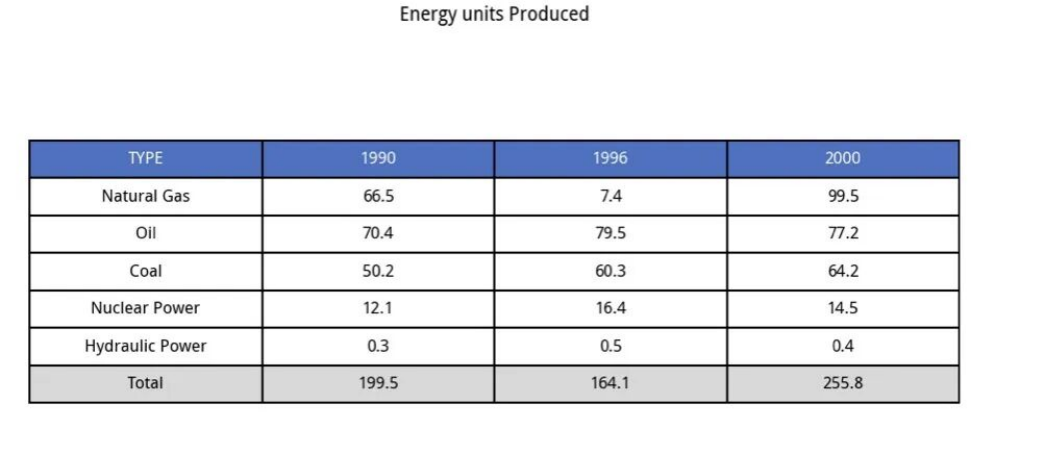
主体分段方法:按照<数值>分段
主体1:oil,natural gas,coal (数值较大)
主体2:nuclear power,hydraulic power(数值较小)
开头段
The table compares the amounts of energy generated from five different sources in 1990, 1996 and 2000.
概述段
Overall, most sources experienced rising trends, resulting in an increase in the total energy production. In addition, fossil fuels dominated energy production throughout the given period, while alternative sources played a comparatively minor role.
思路要点:
- 大部分能源发电量上升,总发电量上升
- 化石燃料发电量较高,其余两种能源发电量较低
Body paragraph 1
The three traditional sources accounted for the vast majority of energy production across the three years. In 1990, oil was the largest source, generating 70.4 units, and this figure then increased steadily to 77.2 units in 2000. Although natural gas ranked second in the beginning (66.5 units), its output plunged to merely 7.4 units in 1996 and rebounded to the highest level at 99.5 units in 2000, overtaking oil to become the dominant source of energy. Coal ranked third throughout the period, with its output rising significantly from 50.2 units in 1990 to 64.2 units in 2000.
思路要点:
- oil:1990年数据高(70.4 units),随后上升到2000年的77.2 units
- natural gas:1990年排第二(66.5 units)→1996年急剧下降到7.4 units→2000年重新上升到99.5 units,超过oil排名
- coal:排名第三,从1990年的50.2 units显著上升到2000年的64.2 units
Body paragraph 2
The other two sources produced considerably less energy. Hydraulic power consistently recorded the lowest figures, fluctuating slightly between 0.3 and 0.5 units over the period. Nuclear power generated relatively more energy than hydraulic power, rising from 12.1 units in 1990 to a peak of 16.4 units in 1996, before declining moderately to 14.5 units in 2000.
思路要点:nuclear power,hydraulic power
- nuclear power,hydraulic power整体数据较小
- hydraulic power:数值低,在0.3 units和0.5 units之间波动
- nuclear power:数值相对较大,从1990年的12.1 units小幅上升到1996年达到峰值16.4 units→小幅下降到2000年的14.5 units